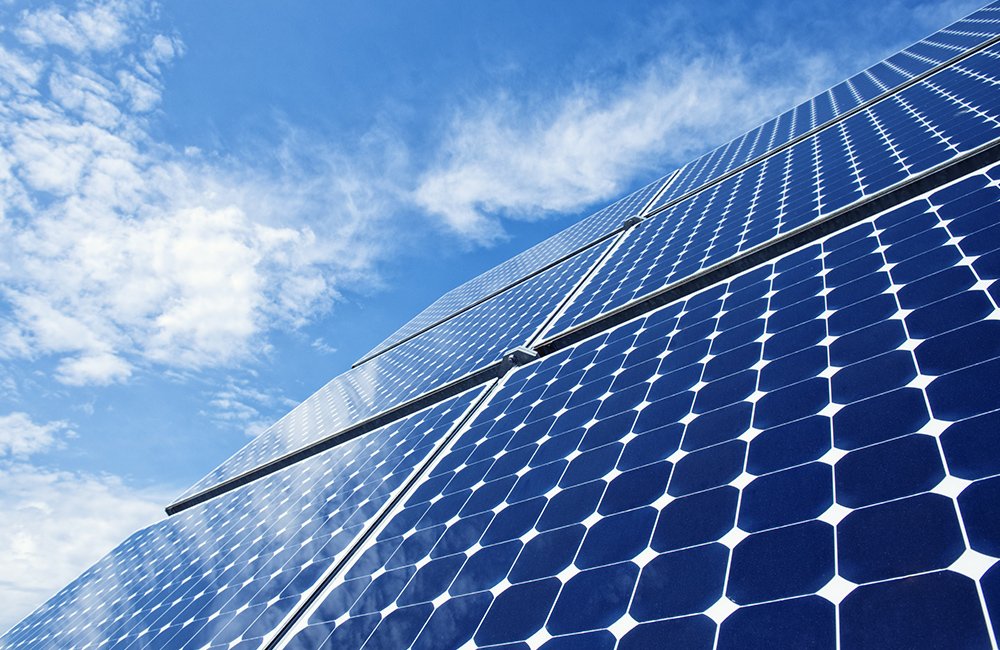
It's 2025, and if you've been eyeing solar panels for your home, you're looking at a market ripe with opportunity. Understanding the true Solar Costs, Savings & ROI isn't just about a price tag; it's about smart investment, long-term financial freedom, and a tangible step towards a sustainable future. Forget the old myths about solar being prohibitively expensive; today's market tells a much brighter story.
In fact, 2025 marks a historic low point for solar power costs, making the decision to go green more financially compelling than ever before. But how do you navigate the numbers, compare quotes, and ensure you're making the most informed decision for your home and wallet? Let's break it down.
At a Glance: Your Solar Investment in 2025
- Average Cost (Before Incentives): $15,000 - $35,000
- Average Cost (After 30% Federal Tax Credit): $10,500 - $24,500
- Cost Per Watt: $2.50 - $3.50 (historically low!)
- Typical System Size: 7-12 kilowatts (kW) for most homes
- Solar Electricity Cost: 6-8 cents per kilowatt-hour (kWh) (vs. grid average of 16.44 cents)
- Average Payback Period: 6-10 years
- Lifetime Savings (25 years): $31,000 - $120,000
- Home Value Increase: Approximately $15,000 on average
- Urgency: The 30% federal tax credit, while currently guaranteed through 2032, faces proposed changes that could impact future eligibility if not installed and inspected by December 31, 2025.
The 2025 Solar Snapshot: Why Now is Different
The landscape for residential solar has dramatically shifted. Historic low prices, coupled with steadily rising electricity rates, create a powerful incentive to switch to solar in 2025. You're not just buying equipment; you're securing predictable, low-cost energy for decades, hedging against volatile utility bills.
While the 30% federal tax credit for residential systems is currently guaranteed by law through 2032, there's been talk in Congress about potentially ending it sooner, specifically after 2025. This creates a subtle urgency for homeowners. If a proposal to end the credit passes, having your system installed and inspected by December 31, 2025, could still secure you that substantial 30% saving – potentially $7,500 or more on a typical system. It's a "better safe than sorry" scenario that underscores the current optimal timing.
Understanding the Numbers: $/W vs. $/kWh
When you start comparing solar quotes, you'll encounter two key metrics that are crucial for truly understanding your investment:
- Cost Per Watt ($/W): This is your upfront system cost divided by its total wattage capacity. Think of it as the unit price for your solar power plant. It's incredibly useful for comparing different installer quotes for similar system sizes. In 2025, the national average hovers around $2.50-$3.50 per watt installed.
- Cost Per Kilowatt-Hour (kWh): This metric tells you the lifetime cost of the electricity your solar system will produce. You calculate it by taking the net system cost (after incentives) and dividing it by the total expected energy production over the system's 25-year lifespan. This is where solar truly shines: while grid electricity averages 16.44 cents per kWh nationally, solar electricity typically costs a mere 6-8 cents per kWh over its lifetime. That's nearly a 50-60% reduction in your electricity cost right there!
Most American homes require a solar capacity between 7 and 12 kilowatts (kW) to offset their electricity use. If your household consumes around 10,632 kWh annually, which is the national average, you'd likely need an 8-9 kW system. Remember, system sizing is about your electricity consumption, not the physical size of your house.
Deconstructing Solar Costs: What You're Really Paying For
A solar energy system isn't just panels on a roof. It's a complex, engineered solution, and its total cost is a sum of many parts. Let's break down where your money goes.
The Big Three: Panels, Inverters, and Labor
- Solar Panels (12-18% of total cost, or $0.30-$0.50 per watt): These are the stars of the show, converting sunlight into electricity.
- Monocrystalline: The premium choice (20-22% efficiency). They look sleek and perform well in various conditions.
- Polycrystalline: A common, cost-effective option (15-17% efficiency).
- Thin-film: Rarely used residentially due to lower efficiency (10-12%).
- Inverters (8-12% of system cost): The brain of your system, inverters convert the DC electricity from your panels into AC electricity your home can use.
- String Inverters ($1,000-$3,000): Economical, converting power from a "string" of panels. If one panel has an issue, it can affect the whole string.
- Microinverters ($2,700-$10,200): Installed on each panel, they optimize performance at the individual panel level. This means shade on one panel won't impact the others, and they offer higher reliability and monitoring.
- Power Optimizers ($900-$6,800): A hybrid solution that pairs an optimizer at each panel with a central string inverter, offering a good balance of efficiency and cost.
- Installation Labor (5.5-7% of total cost, or $1,375-$2,500 for average systems): This covers the skilled technicians who mount panels, wire the system, and ensure everything is up to code and safely connected. This crucial step includes everything from structural checks to electrical hookups.
The Hidden Half: Soft Costs
Perhaps surprisingly, a significant chunk of your solar investment—40-50%—falls under "soft costs." These aren't the physical components but the essential services and logistics that make your solar project happen:
- Sales and Marketing (18%): The costs associated with reaching customers, education, and sales processes.
- Permitting and Interconnection (8%): Navigating local building codes, electrical inspections, and getting approval from your utility company to connect to the grid. This can be a complex, bureaucratic process that varies widely by municipality.
- Overhead and Profit (22%): Covers the installer's operational expenses, staff salaries, insurance, and, of course, their profit margin.
- Supply Chain/Logistics (9%): Transporting panels, inverters, and other equipment from manufacturers to your home.
Beyond the Averages: Why Costs Vary So Much
While national averages provide a good benchmark, your actual solar costs can fluctuate significantly based on several factors.
Location, Location, Location
Solar costs are highly state-dependent, reflecting market maturity, local regulations, labor rates, and available incentives.
- Lowest Average Costs (2025): Arizona ($2.04/W), Texas ($2.13/W), Nevada ($2.18/W), Florida ($2.53/W). These states often have robust solar markets and streamlined permitting.
- Highest Average Costs (2025): Wyoming ($3.54/W), Hawaii ($3.37/W), Tennessee ($3.36/W), Massachusetts ($3.04/W). Higher labor costs, complex regulations, or less mature markets can drive these prices up.
Size Matters: Economies of Scale
Generally, the larger your solar system, the lower its cost per watt. This is due to economies of scale, where certain fixed costs (like permitting or initial setup) are spread across more panels.
- A 5 kW system might cost $2.97/W ($10,395 after the 30% federal tax credit).
- A 12 kW system, however, could drop to $2.65/W ($22,260 after credit).
Roof Complexity & Home Upgrades
Not all roofs are created equal, and some homes require pre-solar work:
- Complex Roofs: Multiple angles, obstructions (chimneys, skylights), or steep pitches can add $0.50-$1.50 per watt to your installation cost.
- Electrical Panel Upgrades: If your home has an older electrical panel (under 200 amps), you might need an upgrade to handle the new solar input. This can cost an additional $1,500-$4,000.
- Roof Replacement: If your roof is nearing the end of its life, it's wise to replace it before installing solar panels, as removing and reinstalling panels for a new roof can be costly. A new roof can add $8,000-$20,000 to your total project cost.
- Structural Reinforcement: In rare cases, especially with older homes or heavy snow loads, your roof might need reinforcement, adding $2,000-$8,000.
Making Solar Affordable: Smart Financing Options
Don't have $10,000-$25,000 sitting around? You're not alone. Most homeowners finance their solar systems, and understanding your options is key to maximizing your ROI.
The Cash Advantage
Paying for your solar system upfront with cash offers the maximum financial benefits. You avoid interest payments entirely, reap the full 30% federal tax credit, and see the highest return on investment. If you have the capital, this is the most direct path to significant long-term savings.
Smart Solar Loans
Solar loans are a popular choice, allowing you to own your system without a hefty upfront investment.
- Terms: Typically 10-25 years with interest rates ranging from 3-8%.
- Monthly Payments: Often, your monthly loan payment plus a small remaining utility bill (if you don't offset 100%) will be less than your previous electricity bill.
- Total Interest: Over the life of the loan, you might pay an additional $3,000-$8,000 in interest, but this is often dwarfed by your electricity bill savings.
- Benefits: You still own the system, qualify for the 30% federal tax credit, and benefit from increased home value.
Leases & PPAs: Low Upfront, Different Savings
Solar leases and Power Purchase Agreements (PPAs) are attractive if you want zero or minimal upfront cost. However, they come with a trade-off: you don't own the system, so you don't qualify for the federal tax credit or direct increase in home value from the panels.
- Solar Lease: You pay a fixed monthly fee (typically $50-$250) to a solar company for the use of the panels. They own, maintain, and monitor the system. You benefit from lower monthly energy costs.
- Power Purchase Agreement (PPA): You pay for the electricity the panels produce at a fixed rate, often 10-15% below your utility's rate. This rate can increase annually, but it's typically still lower than grid electricity.
- Consideration: While these options offer immediate savings without investment, your long-term savings are generally lower than with ownership, and you miss out on significant tax incentives.
Unlocking Maximum Savings: Incentives & Strategies
The true financial appeal of solar often lies in the robust network of incentives designed to make it more accessible.
The Powerful Federal ITC
The Federal Solar Investment Tax Credit (ITC) is the biggest game-changer. It allows you to claim 30% of your total solar installation cost as a credit against your federal income taxes. For a $25,000 system, that's a $7,500 direct reduction in your tax liability. This credit is currently guaranteed through 2032, making it a cornerstone of finding out if solar is worth it for many homeowners. Remember the urgency mentioned earlier: while the 2032 date is law, proposals to end it earlier mean 2025 could be a critical year.
State & Local Boosts
Beyond federal incentives, many states and local municipalities offer their own programs:
- Cash Rebates: Direct payments that can range from $500 to $5,000.
- State Tax Credits: Similar to the federal ITC but at the state level, typically 10-25% of the system cost.
- Property Tax Exemptions: Solar installations often increase home value, but many states exempt this added value from property tax assessments.
- Sales Tax Exemptions: Some states waive sales tax on solar equipment purchases, providing another layer of savings.
Net Metering: Selling Back to the Grid
Net metering is a crucial policy that allows you to send any excess electricity your panels produce back to the utility grid. In return, your utility credits your account, often at the full retail rate. This effectively allows you to "store" energy on the grid for when your panels aren't producing (like at night) and can significantly reduce, or even eliminate, your monthly electricity bills.
SRECs: Earning for Your Green Energy
In some states (e.g., Maryland, Massachusetts, New Jersey, Pennsylvania), you can earn Solar Renewable Energy Credits (SRECs). When your solar system generates a certain amount of electricity (usually 1 megawatt-hour, or MWh), you earn one SREC. You can then sell these credits on an open market to utility companies that need to meet renewable energy mandates. This can provide an additional income stream of $50-$400 annually, further enhancing your solar ROI.
The Payback & The Payoff: Calculating Your ROI
This is where the financial benefits truly crystallize. Solar isn't just an expense; it's a long-term investment that pays dividends.
How Long Until Your System Pays for Itself?
The average payback period for a residential solar system is 6-10 years. This is calculated by taking your Net System Cost (after all incentives) and dividing it by your Annual Electricity Savings. For instance, if your net system cost is $15,000 and you save $2,000 on electricity bills annually, your payback period is 7.5 years.
Long-Term Savings & Home Value Boost
Once your system has paid for itself, you're essentially getting free electricity for the remaining 15-20+ years of its lifespan. This leads to substantial projected savings of $31,000-$120,000 over 25 years. These savings represent money that would otherwise go to your utility company, now staying in your pocket.
Beyond electricity bill savings, solar installations also significantly increase your home's value. Studies show that homes with solar panels sell for approximately $15,000 more on average, and often sell faster than comparable homes without solar. This appreciation is tax-exempt in many areas due to property tax exemptions for solar.
Anticipating Extra Costs: What to Look Out For
While the overall trend for solar costs is down, be prepared for potential additional expenses that can arise depending on your specific home and situation:
- Roof Replacement: As mentioned, if your roof is old, budgeting for a new one ($8,000-$20,000) before solar installation is often the most cost-effective approach.
- Structural Reinforcement: Older homes may need structural upgrades ($2,000-$8,000) to safely support the panels.
- Complex Roof Layouts: Multiple gables, dormers, or chimneys mean more labor and custom racking, increasing costs by $0.50-$1.50 per watt.
- Premium Roofing Materials: Certain materials like slate or cedar shake require specialized installation techniques, adding to labor costs.
- Tree Removal: Shading from trees can drastically reduce panel efficiency. Removing large trees can cost $500-$2,000 per tree.
- Electrical Upgrades: Upgrading an outdated electrical panel can run $1,500-$4,000.
- Ground Mount Systems: If roof space is limited or shaded, a ground mount system might be necessary. These usually come with a $1-$2 per watt premium due to additional structural work and trenching.
- Premium Equipment: Choosing high-efficiency panels (20%+ premium) or microinverters ($0.30-$0.50 per watt over string inverters) will add to the upfront cost, though they can offer better long-term performance.
Smart Moves to Reduce Your Solar Investment
Even with the declining costs, there are proactive steps you can take to ensure you get the best deal and maximize your Solar Costs, Savings & ROI.
- Obtain 3-5 Quotes: This is perhaps the single most effective way to save money. Different installers have different pricing structures, equipment preferences, and overheads. Comparing multiple detailed quotes can reveal significant price differences, often saving you $5,000-$10,000. Don't just compare the total price; look at the cost per watt, the equipment being offered, and the warranties.
- Time Your Purchase:
- Year-End Discounts: Installers may offer incentives to meet sales quotas towards the end of the year.
- Off-Season Discounts: In many regions, winter is a slower period for solar installations, leading to potential discounts.
- Before Incentive Expirations: As with the proposed federal tax credit changes, acting before a known incentive reduction or expiration can lock in higher savings.
- Optimize Your Equipment Choices:
- Appropriate Sizing: Don't over-size your system. Only produce what you need, considering your current and projected energy consumption.
- Balance Efficiency & Cost: While high-efficiency panels are great, they come at a premium. For many homes, a slightly less efficient panel at a lower price point offers a better overall value.
- Inverter Choice: For simple, unshaded roofs, a string inverter might be perfectly adequate and significantly cheaper than microinverters.
- Skip Unnecessary Premium Features: Evaluate every upgrade. Do you truly need the highest-end monitoring system or a specific brand of panel if a more economical option performs nearly as well for your needs?
- Select Local, Reputable Installers:
- Verify Credentials: Ensure they are licensed and insured in your state.
- Check Reviews: Look for strong BBB ratings, positive customer reviews, and testimonials.
- Warranties: A comprehensive warranty on equipment and workmanship provides peace of mind.
- Avoid Door-to-Door Sales: While not always bad, these can sometimes be high-pressure tactics. Prefer to research and select installers yourself.
The 2025 Solar Outlook: Why Now is Prime Time
The solar industry in 2025 is characterized by a favorable confluence of factors. Supply chain stabilization has contributed to lower equipment prices, allowing installers to pass those savings on to you. Technology continues to advance, driving down the per-watt cost of panels and improving efficiency.
While policy changes, particularly regarding the federal tax credit, introduce an element of urgency and potential future cost uncertainty, they also highlight the exceptional value currently available. State-level policies are constantly evolving, with many states continuing to enhance incentives to encourage adoption.
Overall, 2025 stands out as an optimal year for homeowners to invest in solar, offering an unparalleled blend of affordability, strong incentives, and long-term financial security.
Your Next Steps Towards Solar Savings
Ready to take control of your energy future? The path to harnessing solar power for your home is clearer and more rewarding than ever. Start by understanding your current electricity consumption, then reach out to several reputable local installers for quotes. Armed with the knowledge of Solar Costs, Savings & ROI, you're well-equipped to make an informed decision that benefits both your wallet and the planet for decades to come. Don't just pay your utility bill; generate your own power.